Greenhouse Whitefly
Whiteflies
Description
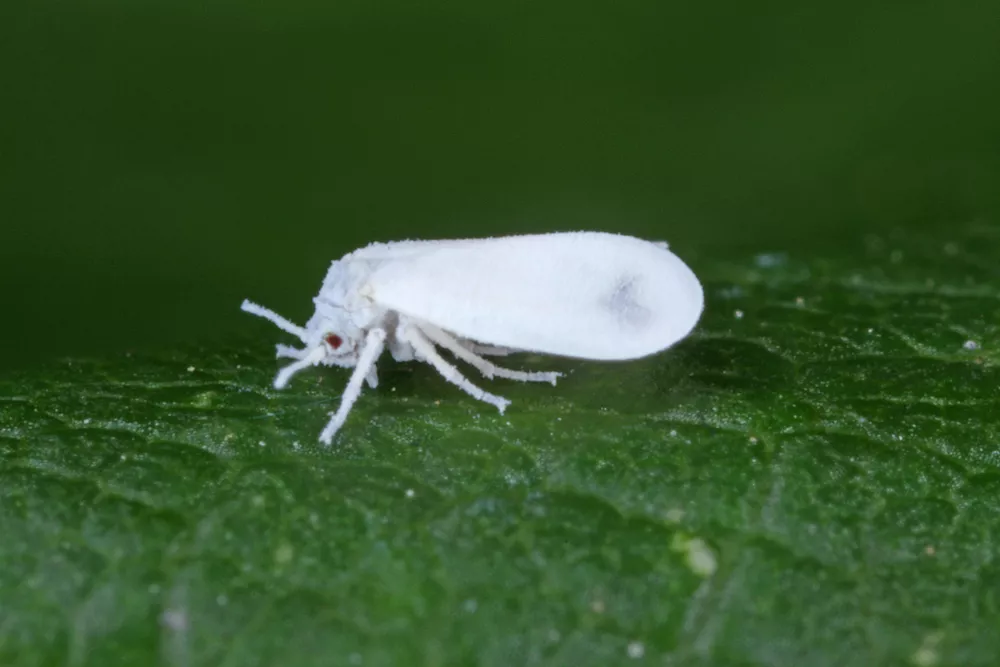
Whiteflies are small, flying insects that primarily target the underside of leaves. They feed on the plant’s sap, leading to yellowing, wilting, and sometimes plant death. Whiteflies are often seen in large numbers and excrete honeydew, which can lead to the growth of black mold. They are common in greenhouses and can spread viruses to plants.
Symptoms & Identification
Yellowing of leaves
Sticky honeydew residue on leaves and surrounding areas
Presence of white, flying insects around plants
Sooty mold growth due to honeydew
Stunted plant growth
Prevention Methods
Keep plants well spaced and avoid overcrowding to reduce humidity and prevent favorable conditions for whiteflies.
Use reflective mulches to confuse and deter whiteflies.
Introduce natural predators, such as ladybugs and parasitic wasps (Encarsia formosa).
Regularly remove affected leaves and plant material from the garden.
Avoid over-fertilizing with nitrogen, which can encourage whitefly infestations.
Control Methods
Use yellow sticky traps to capture adult whiteflies.
Apply insecticidal soap or neem oil to affected plants.
Introduce natural predators like parasitic wasps or lacewings.
For severe infestations, consider using an insecticide labeled for whiteflies.
Vacuum adult whiteflies off plants if the infestation is small.
Organic Remedies
Neem Oil: Disrupts feeding and reproductive cycles of whiteflies.
Insecticidal Soap: A safe and effective treatment that kills whiteflies by suffocation.
Yellow Sticky Traps: Attract and capture flying whiteflies.
Garlic and Chili Spray: A homemade repellent for whiteflies.
Parasitic Wasps (Encarsia formosa): A natural predator that parasitizes whitefly larvae.